
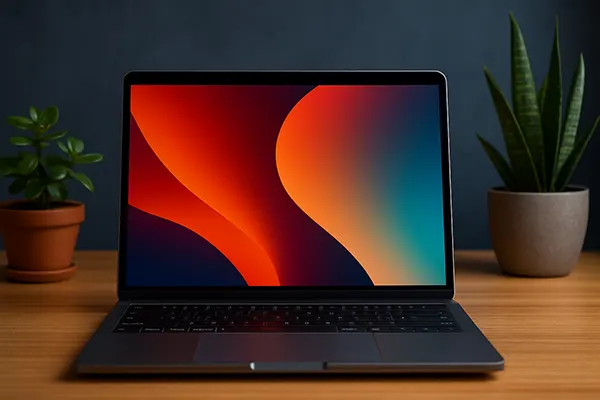
MacBook 2025: Real Changes Brought by the Apple Silicon M5 Chip
The 2025 MacBook generation marks a significant stage in Apple’s ongoing shift to its own processors, with the M5 chip expected to elevate performance, efficiency and on-device intelligence. Early industry reports and supply-chain insights suggest that Apple aims to extend battery life, expand AI-driven features and introduce more advanced thermal management without compromising the familiar lightweight form. These improvements shape a realistic image of what users should expect rather than speculative promises, particularly as competition in the premium laptop segment intensifies.
Performance Improvements in the Apple Silicon M5
The M5 chip is anticipated to deliver a balanced leap in processing capability due to refinements in its CPU and GPU architecture. Analysts expect the CPU to move to an updated core design with improved single-thread efficiency and stronger multi-core throughput, allowing heavy workloads such as software development, professional editing and scientific modelling to run more smoothly. Rather than chasing theoretical peak power, Apple is likely prioritising consistent real-world responsiveness across macOS tasks.
The integrated GPU is expected to gain noticeable graphical strength thanks to a more efficient rendering engine and higher compute capacity. This will benefit creative professionals working with advanced 3D tools and media applications that are already optimised for Apple’s architecture. The predicted GPU uplift will also help future versions of macOS deliver richer visual effects without overloading system resources.
Another realistic enhancement is the expansion of the Neural Engine, which is likely to support more complex on-device AI processes. As machine-learning features become essential in productivity apps, communication tools and security systems, a stronger Neural Engine allows models to run locally with lower latency. This is in line with Apple’s focus on privacy-preserving computation without offloading sensitive data to remote servers.
Thermal Efficiency and System Stability
Improved thermal control is expected to be one of the practical upgrades of the MacBook lineup in 2025. Apple is reportedly refining its cooling assemblies in the Pro models while optimising airflow routes within the chassis. This would allow the M5 chip to maintain high performance levels over extended workloads without throttling, particularly in professional environments where stability is crucial.
Passive heat dissipation in the fanless Air models may also see progress through redesigned internal layers and more efficient heat spreaders. These changes will likely give users longer bursts of high performance before the system reduces power to maintain safe temperatures. Such refinements are aligned with Apple’s long-term goal of delivering silent yet capable ultrathin devices.
System stability will further benefit from updated power-management controllers paired with the M5 architecture. These controllers are expected to distribute energy more intelligently between CPU, GPU and AI units, preventing sudden peaks that could affect battery health or cause unexpected slowdowns. The result should be a more predictable and reliable performance profile for professional multitasking.
Battery Life and Energy Efficiency Gains
One of the most significant improvements anticipated for 2025 is extended battery life thanks to the M5’s more advanced fabrication process. Industry estimates suggest that Apple’s chip suppliers are transitioning to a refined 3-nanometre class node, which allows higher transistor density with reduced power consumption. Users can realistically expect longer working sessions, even under demanding tasks, without sacrificing system responsiveness.
Real-world usage is likely to benefit from smarter energy distribution, particularly as the operating system becomes more reliant on background AI routines. The M5 may include updated low-power cores capable of handling daily actions such as email sorting, document syncing and app maintenance without activating the main performance units. This distinction can meaningfully extend the time a MacBook remains unplugged during normal office or academic use.
Battery-saving enhancements may also be supported by OLED-based display options expected to appear in at least some models. These screens consume less energy at moderate brightness levels and offer more precise colour control. The combination of an efficient chip, improved display technology and optimised macOS scheduling gives a realistic foundation for a stronger endurance profile.
Charging Technology and Long-Term Battery Health
Apple is likely to update its charging controllers to support more adaptive power delivery, ensuring lower heat generation during fast charging. This is important for prolonging cell lifespan and reducing stress on internal components. Users accustomed to topping up their devices multiple times per day will benefit from a more controlled charging cycle.
Reports also indicate that Apple may introduce new battery-management diagnostics accessible through macOS settings. These tools could provide more accurate projections of long-term battery health and usage patterns, helping users adopt more sustainable charging habits. Transparency in battery analytics has become increasingly important for professionals whose work depends on reliable mobility.
Additionally, improvements in system-level optimisation may allow the MacBook to maintain stronger standby performance, reducing overnight drain and extending the intervals between charges. Combined with the M5’s efficiency gains, these upgrades support a more durable and predictable battery experience throughout the device’s lifespan.
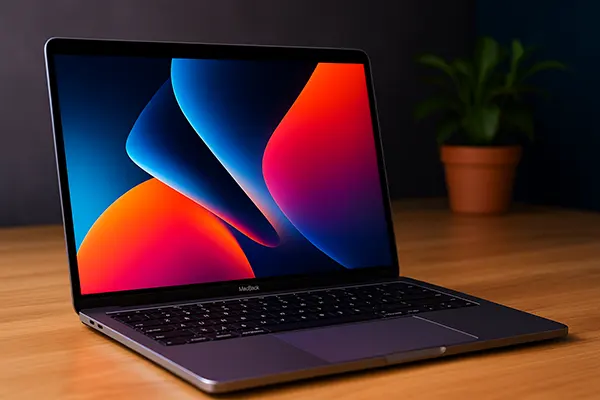
AI-Driven macOS Capabilities Powered by the M5
In 2025, macOS is expected to integrate deeper on-device AI functions that rely heavily on the upgraded Neural Engine. This shift emphasises local processing, enabling tasks such as text generation, voice editing, image clean-up and real-time translation to operate without cloud connectivity. Apple is positioning these features as practical tools rather than experimental additions, focusing on accuracy, privacy and low latency.
The operating system may also introduce new workflow automations that analyse user behaviour and adjust system resources accordingly. These routines can help streamline multitasking by predicting which applications will be needed next and adjusting memory allocation to reduce loading times. Such improvements rely on AI models optimised for the M5 architecture and built to run efficiently without draining the battery.
Creative applications are likely to benefit from wider AI integration as developers tap into the expanded toolkit provided by macOS. More powerful local inference enables faster video processing, enhanced audio repair, and smarter colour adjustments, making professional tasks more accessible even when working offline. These features mark a realistic evolution of Apple’s ecosystem rather than a dramatic overhaul.
Privacy-Centric Computing and Secure Processing
Apple continues to prioritise on-device data privacy, and the M5 chip is expected to strengthen this approach with improved encrypted memory regions and more efficient secure-enclave operations. These upgrades allow sensitive information, such as biometric data and personal communications, to remain isolated from external networks during AI processing.
Secure computation is also likely to expand into app-level features, giving developers more tools for implementing protected workflows without sacrificing performance. This includes encrypted local model execution for applications handling legal, financial or corporate documents, where confidentiality is essential.
With the increasing reliance on AI routines, improved safeguards help maintain trustworthiness in the system. These advancements ensure that local machine-learning tasks remain fully compliant with privacy expectations while still delivering the speed and accuracy required in modern professional environments.
Related articles
-
 Mac mini with M6 in 2026: What Change...
The 2026 Mac mini is a more substantial update than …
-
 MagSafe and Qi2 25W in 2026: Which Wi...
Wireless charging is more straightforward on the iPhone 17 generation …
-
 App Store 18+ Ratings and Declared Ag...
Apple’s age-safety rules are more detailed in 2026, but two …