
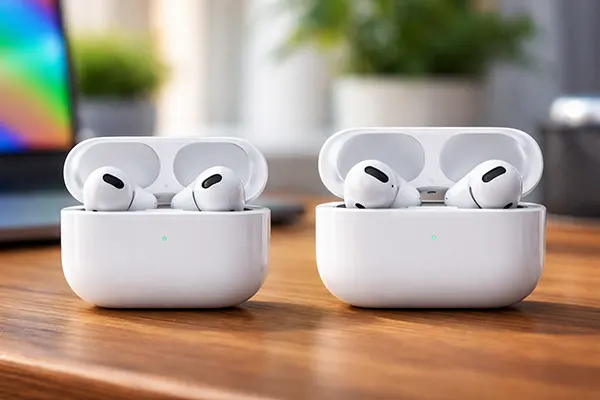
AirPods 4 vs AirPods Pro 2 in 2026: What to Choose for Calls, Noise Cancellation and Hearing Features
Choosing between AirPods 4 and AirPods Pro 2 in 2026 is no longer just about price. Apple has clearly separated these models by use cases: everyday listening, calls, commuting, and even hearing-related support. This comparison focuses on real scenarios rather than technical specifications, helping you decide which model fits your routine.
Sound Quality and Everyday Listening Experience
AirPods 4 offer a refined sound profile compared to earlier standard models. Audio feels clearer and more balanced, especially for podcasts, voice content, and casual music listening. However, the open-fit design means that surrounding noise is still present, which affects perceived quality in busy environments.
AirPods Pro 2 deliver a more immersive and controlled sound due to their in-ear design with silicone tips. Bass is deeper, vocals are more defined, and overall detail is more consistent. This becomes especially noticeable when listening in public spaces or during travel.
In everyday use, the difference is practical rather than theoretical. AirPods 4 feel lighter and more natural for extended wear, while AirPods Pro 2 maintain audio clarity regardless of external noise, making them more suitable for focused listening.
How Audio Performance Affects Real Use Cases
For quiet environments such as home or office use, AirPods 4 provide a comfortable and sufficient listening experience. They are easy to wear for long sessions and do not create pressure in the ears.
In contrast, AirPods Pro 2 are better suited for commuting, flights, and shared spaces. Their design blocks external noise and maintains consistent sound quality without requiring higher volume levels.
Both models support spatial audio features in 2026, but AirPods Pro 2 handle dynamic head tracking more precisely. This makes a difference when watching films or using immersive Apple ecosystem features.
Calls, Microphones and Voice Clarity
AirPods 4 include upgraded microphones and voice processing that perform well in stable conditions. Calls sound natural, and background noise is reduced to a certain extent, making them suitable for indoor communication.
AirPods Pro 2 go further with advanced microphone arrays and adaptive processing. They reduce environmental noise more effectively, keeping your voice clear even in challenging conditions such as wind or traffic.
Consistency is a key difference here. AirPods 4 may struggle when surroundings become noisy, while AirPods Pro 2 maintain stable performance across different environments.
Real-World Calling Scenarios
For home use, video calls, and general conversations, AirPods 4 are reliable and simple to use. They require minimal adjustment and provide clear audio in quiet settings.
For users who take calls while moving, travelling, or working outdoors, AirPods Pro 2 are a stronger option. Their ability to isolate and prioritise voice makes communication easier.
With ongoing software improvements in 2026, AirPods Pro 2 benefit more from Apple’s voice processing updates, making them a more dependable long-term choice for frequent calls.
Noise Cancellation and Hearing Health Features
The biggest distinction between these models lies in noise control. AirPods 4 may include adaptive audio elements, but they do not provide full active noise cancellation due to their open design.
AirPods Pro 2 include advanced Active Noise Cancellation and Transparency Mode. These features allow users to switch between full isolation and awareness of surroundings, depending on the situation.
Apple has also introduced a stronger focus on hearing-related functionality. AirPods Pro 2 support features designed to enhance speech clarity and adapt sound based on the environment, making them more versatile in everyday life.
Hearing Features and Long-Term Use
AirPods 4 are focused on general use and do not include specialised hearing support tools. They are suitable for casual listening but not for improving speech perception in complex environments.
AirPods Pro 2 include features such as conversation enhancement, which helps amplify voices in front of you while reducing background noise. This is particularly useful in crowded or noisy settings.
For long-term use, these additional capabilities make AirPods Pro 2 more adaptable. They are not limited to entertainment but can also assist with clarity and comfort in everyday communication.
The choice ultimately depends on your priorities. AirPods 4 are a comfortable and practical option for everyday use and simple calls. AirPods Pro 2 are designed for users who need better noise control, clearer communication in all environments, and additional hearing-focused features. In 2026, the difference between them reflects how Apple tailors products to specific real-life needs rather than offering a one-size solution.
Related articles
-
AirPods 4 vs AirPods Pro 2 in 2026: W...
Choosing between AirPods 4 and AirPods Pro 2 in 2026 …
-
 iPhone 17e vs Used iPhone 16 Pro: Whi...
Choosing between a brand-new mid-range iPhone and a previously owned …
-
 MacBook for Study and Office in 2026:...
Choosing a MacBook for study or office work in 2026 …