
iPadOS 26 and the New Windowing System: Can an iPad Replace a Laptop in 2026?
For years, Apple has positioned the iPad as a device capable of bridging the gap between a tablet and a traditional computer. With the release of iPadOS 26, that ambition has become more tangible than ever. The operating system introduces a redesigned windowing environment, enhanced multitasking controls, and deeper support for professional workflows. As hardware continues to evolve with Apple’s latest silicon chips and accessories, many users are asking a practical question: can an iPad genuinely replace a laptop in 2026? The answer depends not only on the software itself but also on the type of work being performed and the expectations users bring to a modern computing device.
How iPadOS 26 Changes the Multitasking Experience
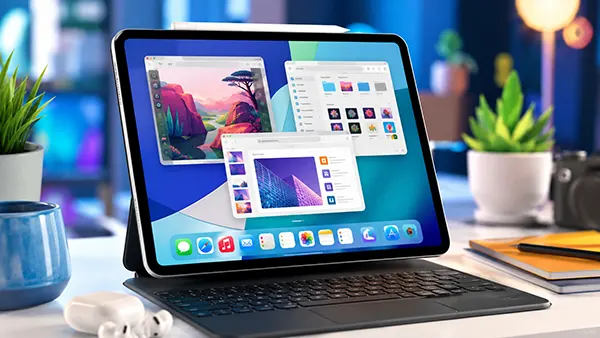
The most significant update in iPadOS 26 is the redesigned window management system. Unlike earlier versions that relied heavily on Split View and Stage Manager, the new interface allows users to resize, arrange, and organise application windows more freely. This brings the experience closer to what professionals expect from desktop operating systems while maintaining the touch-first design philosophy that defines the iPad.
Window controls have become more intuitive, making it easier to move between multiple applications during complex workflows. Tasks such as researching in Safari while editing documents, managing spreadsheets alongside communication tools, or working with creative software now require fewer gestures and less effort. External display support has also matured, allowing applications to behave more naturally across multiple screens.
These changes reduce one of the most common criticisms of previous iPad generations. Many users viewed the device as powerful hardware constrained by software limitations. With iPadOS 26, the operating system makes better use of available processing power, creating a workflow that feels considerably more computer-like without sacrificing portability.
Why Window Management Matters for Productivity
Productivity often depends on the ability to work with several sources of information simultaneously. Traditional laptops excel in this area because they allow multiple applications to remain visible and accessible at the same time. The new windowing environment narrows this gap significantly by providing greater flexibility when arranging workspaces.
Professionals working in finance, marketing, education, consulting, and project management frequently need to reference documents while attending virtual meetings or analysing data. The updated multitasking tools support these requirements more effectively than earlier versions of iPadOS, helping users complete tasks with fewer interruptions.
The improvements are particularly noticeable when using larger devices such as the 13-inch iPad Pro. Combined with an external keyboard and trackpad, the experience increasingly resembles that of a lightweight notebook computer while retaining the advantages of a touch interface and Apple Pencil compatibility.
Areas Where the iPad Now Competes Directly with Laptops
Modern iPad hardware delivers performance that rivals many ultrabooks. Devices powered by Apple silicon processors handle demanding workloads including photo editing, 4K video production, graphic design, note-taking, and business applications with ease. The performance difference between an iPad and a laptop is no longer the primary concern for many users.
Software availability has improved substantially. Major productivity suites, collaboration tools, cloud storage services, creative applications, and communication platforms are fully optimised for iPadOS. Many professionals can perform the majority of their daily responsibilities without requiring a traditional desktop operating system.
Battery life remains another advantage. Most iPad models comfortably support a full working day without requiring a charger. Combined with lower weight and compact dimensions, the device offers a level of mobility that appeals to remote workers, students, consultants, and business travellers who frequently work away from a fixed desk.
Who Can Realistically Use an iPad as a Primary Computer?
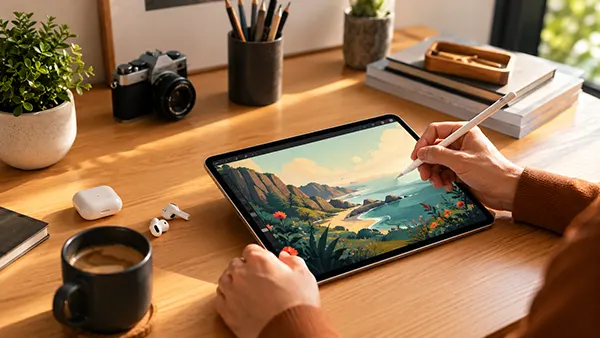
Students are among the strongest candidates for an iPad-first workflow. Research, note-taking, document creation, video conferencing, and content consumption are all handled efficiently. Apple Pencil integration also provides advantages that many laptops cannot match without additional accessories.
Creative professionals working in illustration, photography, digital art, content creation, and video editing may find that the iPad offers unique benefits. Direct touch interaction and specialised creative applications enable workflows that can sometimes feel more natural than those available on traditional computers.
Business users focused on communication, presentations, project management, document review, and cloud-based applications can also operate effectively on an iPad. For these groups, the combination of portability, battery life, and growing software maturity often outweighs the remaining limitations.
Limitations That Still Prevent Complete Laptop Replacement
Despite substantial progress, certain professional requirements continue to favour conventional laptops. Advanced software development, engineering applications, specialised enterprise systems, and some scientific workloads often depend on desktop-class tools that remain unavailable or restricted on iPadOS.
File management has improved over several generations of iPadOS, yet power users may still encounter situations where desktop operating systems offer greater flexibility. Managing complex directory structures, handling large numbers of files, or interacting with specialised external hardware can be more straightforward on macOS or Windows devices.
Some professional environments also require software ecosystems built around decades of desktop computing standards. While cloud services continue to reduce dependence on local applications, organisations with highly specialised workflows may still rely on tools that have no direct equivalent on the iPad.
Can the iPad Fully Replace a Laptop in 2026?
For a growing percentage of users, the answer is yes. Students, business professionals, content creators, and many remote workers can complete nearly all daily tasks on an iPad running iPadOS 26. The new windowing system removes a major barrier by making multitasking more practical and efficient.
However, replacement is not universal. Users who depend on specialised desktop software, advanced development environments, or highly technical workflows may still require a traditional laptop. In these cases, the iPad serves best as a complementary device rather than a complete substitute.
Looking at the state of computing in 2026, the discussion has shifted significantly. The question is no longer whether the iPad is powerful enough to replace a laptop. Instead, the more relevant consideration is whether a user’s specific workflow can be supported within the increasingly capable ecosystem of iPadOS 26. For many people, the answer is now closer to yes than at any point in the product’s history.
Related articles
-
 Mac mini with M6 in 2026: What Change...
The 2026 Mac mini is a more substantial update than …
-
 MagSafe and Qi2 25W in 2026: Which Wi...
Wireless charging is more straightforward on the iPhone 17 generation …
-
 App Store 18+ Ratings and Declared Ag...
Apple’s age-safety rules are more detailed in 2026, but two …